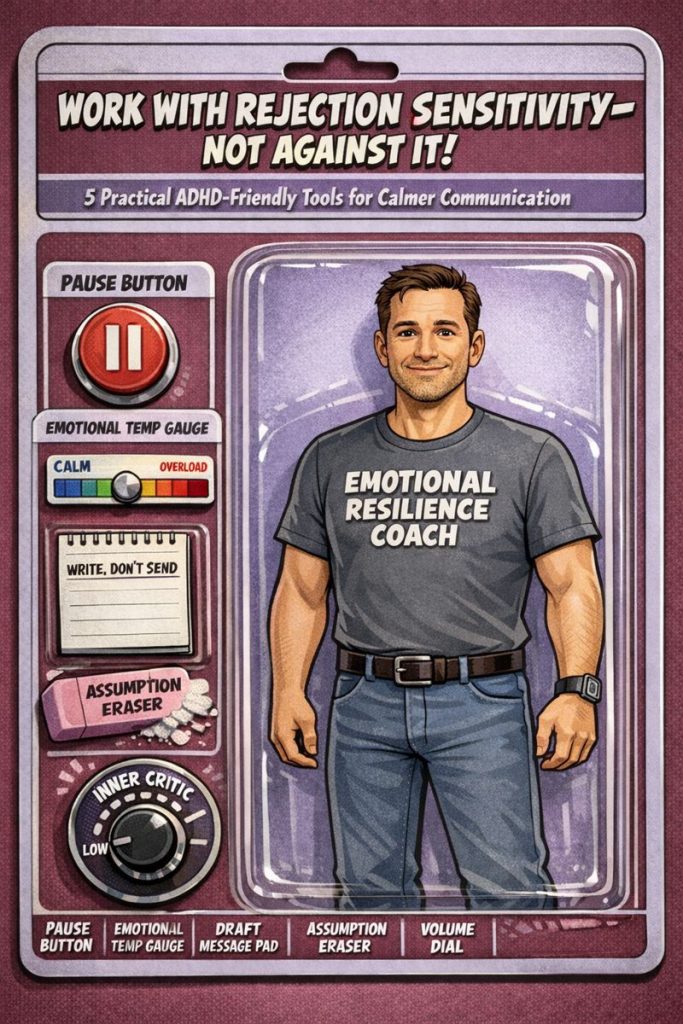
How to Work With ADHD Rejection Sensitivity
A 5 Point Practical Guide
I do not normally write about celebrities, and I tend to be cautious about using public figures as reference points when talking about adult ADHD. Fame can easily distort the conversation or pull focus away from the quieter realities most people are living with.
But occasionally someone describes an internal experience so precisely that it cuts straight through reputation, image, and noise. When Paris Hilton spoke about ADHD Rejection Sensitivity as feeling like a demon in your mind, constantly feeding you negative thoughts, it resonated deeply with many adults with ADHD. Full Business Insider article here.
Not because of who said it, but because of what it named.
ADHD Rejection sensitivity is one of the most impactful and least openly discussed aspects of ADHD. It is not about being thin skinned or emotionally fragile. It is about how quickly the nervous system reacts to perceived criticism, conflict, or disapproval, and how hard it can be to return to baseline once that response has been triggered. For many people, this reaction has been shaped by years of being misunderstood, corrected, or subtly judged.
This guide is not about fixing rejection sensitivity. It is about understanding it well enough to reduce the damage it can quietly cause in everyday life.
1. Notice the body response before the story
ADHD Rejection sensitivity almost always starts in the body rather than the mind. A tight chest. A rush of heat. A drop in the stomach. A sense of bracing or shrinking. Thoughts usually arrive afterwards, racing to explain the feeling and make sense of the perceived threat.
Learning to notice this physical response early creates a small but powerful pause. You do not need to challenge your thoughts or tell yourself you are overreacting. Simply recognising that your nervous system has been activated can soften the spiral. Over time, this awareness can reduce how quickly the story takes over.
2. Separate what was said from what was assumed
When the nervous system is on high alert, the mind fills in gaps at speed. A neutral email can quickly turn into a narrative about annoyance or disappointment. A short reply can feel like rejection. Silence can feel loaded with meaning.
A grounding practice is to slow this process down. Ask yourself what was actually said or done, and what meaning you are adding to it. This is not about invalidating your feelings. It is about creating space between information and interpretation so your nervous system has room to settle.
3. Lower the emotional temperature before responding
Many adults with ADHD try to respond while emotionally activated, especially when communication feels risky. This often leads to overthinking, rewriting, and second guessing. One short message can absorb far more energy than it should.
Lowering the emotional temperature first usually helps. Writing a response you do not intend to send, summarising the message you received in neutral terms, or stepping away briefly can all reduce intensity. When your nervous system is calmer, your communication is often clearer, quicker, and more proportionate.
4. Ask how much pressure is helping right now
Pressure plays a complex role for ADHD brains. For many people, it is essential for focus and momentum. Without it, tasks drift. With it, action becomes possible.
The key is noticing when pressure is helping you move forward and when it has tipped into threat. Helpful pressure tends to create clarity and direction. Unhelpful pressure tends to create freeze, avoidance, or emotional shutdown. Asking this question allows you to adjust rather than automatically pushing harder.
5. Use support as nervous system care
ADHD Rejection Sensitivity is often accompanied by harsh self judgement. Many people believe they should be able to cope without help, and that using support means weakness or failure.
In reality, support is often what allows the nervous system to stay regulated enough to function. Support might include coaching, accountability, templates, or tools that reduce ambiguity and emotional load. This is not about avoiding responsibility. It is about working sustainably rather than burning out.
A strengths based perspective
Sensitivity is not a flaw. The same nervous system that reacts strongly to rejection is often deeply perceptive, empathetic, and attuned to others. Many adults with ADHD care intensely about impact, fairness, and connection.
The problem is not sensitivity itself. It is living with that sensitivity unsupported. With understanding and the right structures in place, it can become a strength rather than a constant source of threat.
A final thought
If emails feel risky, if feedback hits harder than you expect, or if communication drains you far more than it seems to drain others, there is nothing inherently wrong with you. These experiences are common for adults with ADHD, particularly when rejection sensitivity is involved.
Stories like this resonate because they give language to something many people have carried quietly for years. Once you understand what is really happening, you can start working with your brain rather than constantly pushing against it. And with the right support, that constant inner critic really can become much quieter.
See here for ADHD Imposter Syndrome: 7 Ways to Turn Self-Doubt into Strength.