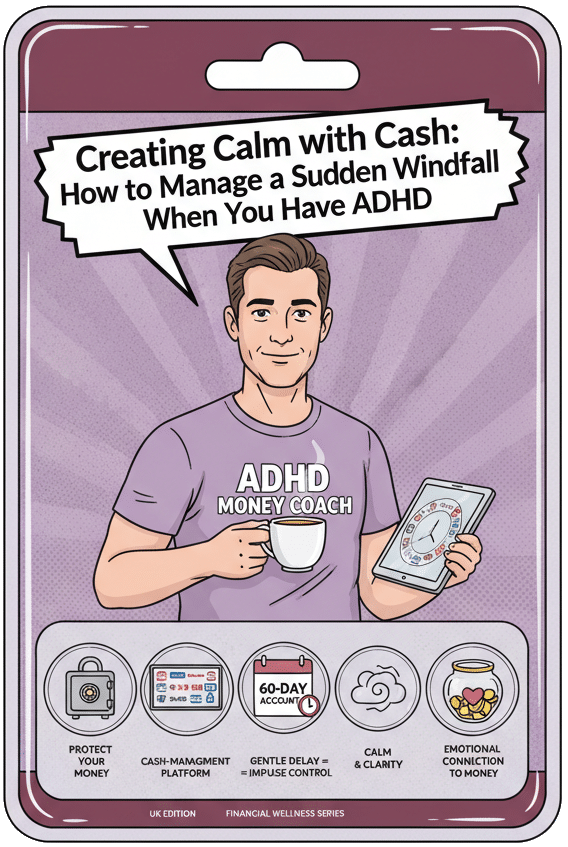
Creating Calm with Cash: How to Manage a Sudden Windfall When You Have ADHD
A conversation with a client last week reminded me of when I had an unexpected windfall. My brain did something peculiar. First, it made a list of all the sensible things I could do with it like pay off my credit card. Then it quietly suggested I buy…a pizza oven. I didn’t even have a garden at the time!
If you’ve received a lump sum, maybe from an inheritance, a divorce settlement, or selling a home or business. You might know that feeling: part excitement, part panic. Your inbox fills with advice. Your brain fills with noise, and at the back of your mind you feel panic that it will get spent on things you don’t really need and won’t be there when you need it.
When ADHD and sudden money collide
If you have ADHD, a windfall doesn’t always feel like a windfall. It can spark anxiety, indecision, and pressure to get it “right.”
You might swing between extremes wanting to invest it all one minute, then avoid it altogether the next. That’s not laziness or poor discipline. It’s the way ADHD affects decision-making, planning, and impulse control.
The answer? Buy yourself time. Create a safe, calm holding pattern for your money while you figure out what you really want to do.
Step One: Separate and Protect
Start by moving the money out of your everyday account. When it’s sat next to your weekly grocery budget, it’s too tempting or too easy to forget it’s there at all.
Put it somewhere separate so you can breathe. Ideally, in an account that earns interest and doesn’t require you to leap through hoops to set up. This is where cash management platforms come in handy.
What is a cash management platform?
It’s like a dashboard for your savings. One login gives you access to multiple UK banks, each protected up to £85,000 by the FSCS.
Once set up, you can:
- Open accounts with different banks easily
- Spread money safely across institutions
- Earn interest while you pause and plan
- See everything in one place (no more password spreadsheets)
Gentle barriers that protect you from yourself
These platforms let you choose different types of accounts:
- Instant-access: Great for emergencies or near-term plans
- Notice accounts (e.g. 60-day): Add a delay that helps stop impulsive spending
- Short fixed-term (3–6 months): Lock in a higher rate while you think
The right mix gives you access when needed but slows things down just enough to avoid knee-jerk decisions.
UK platforms worth knowing
| Platform | Cost | How it works | Best for |
| Raisin UK | Free to use; rates may be slightly reduced | Uses a hub account at ClearBank | Simplicity and ease |
See here for ADHD Imposter Syndrome: 7 Ways to Turn Self-Doubt into Strength